
Agriculture – Electrification of agricultural machinery
Increasing cost pressure, volatile fuel prices, stricter climate targets, and new technological possibilities are fundamentally changing the requirements for machinery and drive systems in agriculture.

Practical Requirements
Challenges
High emissions from diesel fuel
A significant portion of agricultural emissions is generated by the use of diesel in mobile machinery. At the same time, regulatory requirements and pressure along the value chain are increasing.
Volatile energy prices and rising costs
Fluctuating diesel prices, CO₂ taxes, and tax burdens increase uncertainty and make alternative drives increasingly attractive economically, as TCO develops in favor of e-mobility.
Extremely varied duty cycles
Agricultural machinery is used very differently depending on the application; from a few minutes per day to 24-hour continuous operation. The duty cycle determines whether electric solutions are viable or not.
High performance requirements and time pressure
High performance is required for many hours during tillage and harvesting. At the same time, narrow time windows must be met – often without access to charging or refueling infrastructure.
Complexity of the machinery landscape
A wide variety of machines are used:
- Tractors and towing vehicles
- Combine harvesters, forage harvesters, forest harvesters
- Telehandlers and yard loaders
- Feed mixers and implements
This diversity requires specific drive solutions.
Systemic requirements
New drive systems must not only function technically, but also:
- be economically viable
- be integrable into existing operational structures
- contribute to the reduction of import dependencies
- ensure security of supply
Turning Complexity into a System
Agriculture: Our solution expertise
The electrification of agriculture is not a binary change, but a nuanced transformation.
Light work, such as yard operations or precision field work, can already be efficiently electrified today. For medium and heavy applications, hybrid systems or alternative fuels remain necessary depending on the duty cycle.
Electrification is increasingly economically and technically feasible, especially in the lower power range. In the long term, a large proportion of machinery can be electrified – with a potential saving of up to 30% in energy requirements.
A key advantage of agricultural electrification lies in the possibility of self-sufficiency: many farms have large roof areas and can generate PV power that can be used to operate electric machinery. We develop custom solutions that are precisely tailored to this reality – technically, economically, and operationally.
System selection
The selection of the optimal drive system depends on several factors:
Holistic approach
We consider these factors holistically and develop suitable system architectures based on them.
Main benefits
Advantages of the new drive systems
Local zero emissions and low noise levels
Electric systems reduce emissions directly at the point of use and improve working conditions.
High precision and controllability
Electric drives can be precisely controlled and enable significantly more accurate work execution.
Lower wear and maintenance requirements
Fewer mechanical components lead to higher reliability and lower operating costs.
Use of renewable energy sources
Self-produced PV power can be used directly. This represents a decisive advantage for agricultural businesses.
5 Reasons for SUNCAR
Why SUNCAR for Rail
We combine engineering and system integration for reliable solutions in the rail sector.
Practical solutions instead of standard approaches
Consideration of real operating conditions and operational requirements.
System expertise across all levels
Integration of drive, energy, software, and control.
Focus on cost-effectiveness
Technical solutions that pay off in everyday agricultural life.
Understanding of complex duty cycles
From short-term use to continuous operation under high load.
Convinced? Then please get in touch with us. We look forward to supporting you with your project.
Tailor-made Solutions
Relevant Products and Technologies
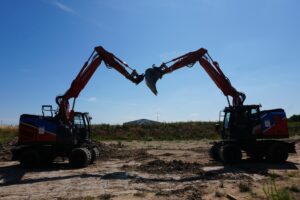
Electric drive systems
For applications with predictable duty cycles, such as yard operations or precision field work, our electric drives enable efficient and locally emission-free operation.
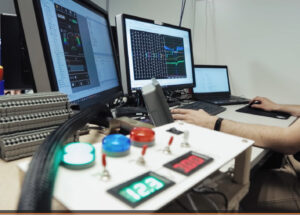
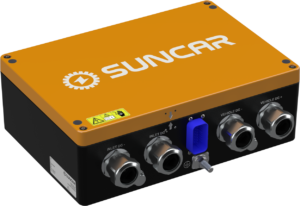
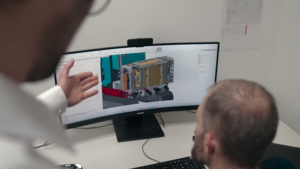
Thermal management
Stable temperatures are crucial for performance and service life. We develop thermal systems for varying loads and demanding environmental conditions.

Our Approach
Our Process
From duty cycle analysis to validation in real operation: SUNCAR develops solutions that combine technical requirements, operational processes, and existing infrastructure into a functioning overall system.

Duty cycle analysis
Power requirements, duration of use, infrastructure, and operational structure.
System definition
Selection of suitable drive and energy solutions.
Development and integration
Implementation in existing or new machine platforms.
Validation in real use
Optimization based on real operating data.
SHALL WE GET STARTED?
Electrification in agriculture – thoughtfully conceived and implemented.
We support you in the development and integration of electric and hybrid systems for agricultural machinery.